Safer Greenbelt
Unbiased electrical consultation.
FAQs
"Yes or no: is my wiring safe?"
"You've got to have some way to judge wiring, some specific criteria, haven't you?"
"Suppose my wiring is unsafe; what's the risk?"
"Do you offer a guarantee?"
Answers
- Yes or no: is my wiring safe?
There is no reliable way of determining, "This cable has X percent probability of shorting, or of starting a fire, in the coming months."
There are, however, many signs of dangerous wiring, and when any problem is uncovered, you'll be shown the evidence and learn why it means danger. Some of that process described in the first book published by Safer Greenbelt's principal, David Shapiro: Old Electrical Wiring (NY:McGraw-Hill, 1998/2010) - You've got to have some specific criteria you use to judge wiring, haven't you?
Yes indeed.
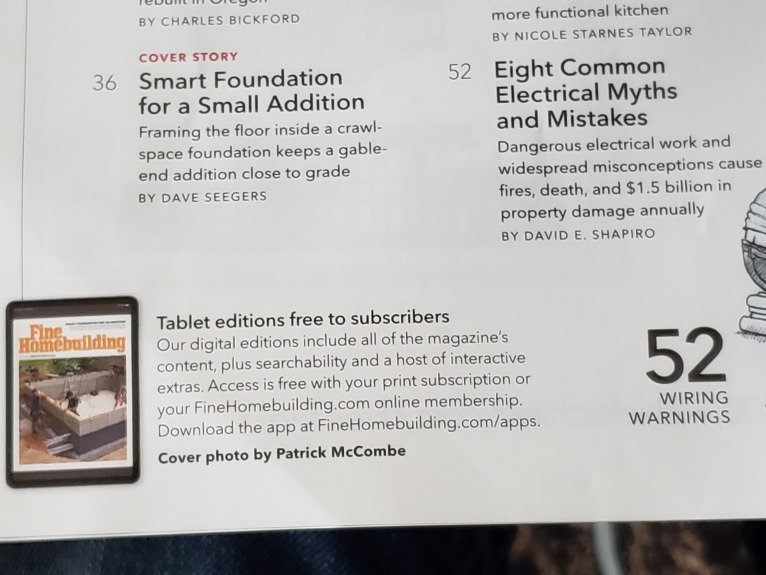
When David evaluates and inspects, he can apply a variety of criteria. He has written extensively about how to judge wiring, as well as warning both professionals and homeowners about common mistakes. He is happy to talk about them as long as you find useful in the course of a consultation. Here's the essence of an article he published in February, 2025, warning carpenters and builders of electrical misundertandings—followed by Page One of an extensive article on just this sort of inspection, that he published 40 years ago.
You are welcome to request any of his pictured articles when you schedule a consultation.

-
"Suppose my wiring is considered unsafe; what's the risk?"
- fire
- shock or electrocution
- equipment damage
- indirect consequences from these harms.
- There can be liability when others get hurt or nearby properties suffer damage.
- There's the fall from a ladder when the person climbing gets even a little shock.
- There's fire damage, and
- water damage from suppressing fire.
- The list goes on.
- "Does Safer Greenbelt offer
a guarantee"
- You're guaranteed an honest report. This can include "I don't know," and "I'll have to check."
- Safer Greenbelt would guarantee new wiring that David had installed, either by himself or with very closely supervised help. Safer Greenbelt can't guarantee somebody else's independent work.
- Inspection always means spot-checking, and spots that haven't been checked are unknowns. That's one reason that two different inspectors can pick up different sets of problems.
- What's more, because of the benefits of distributed exposure, meaning fresh looks, future examination may uncover issues that were not identified earlier.
The right-hand column contains only images of Greenbelt scenery and activities (avec alt-text).
Greenbelt brings to mind . . .
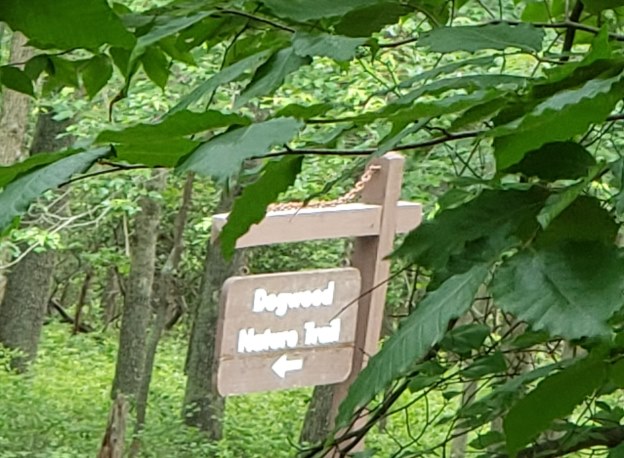
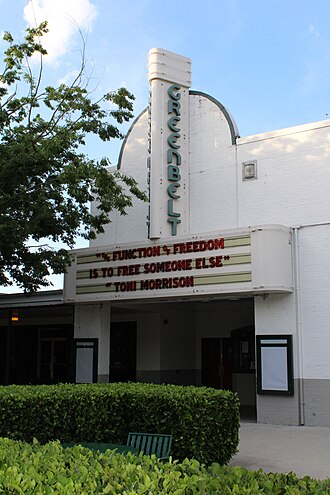

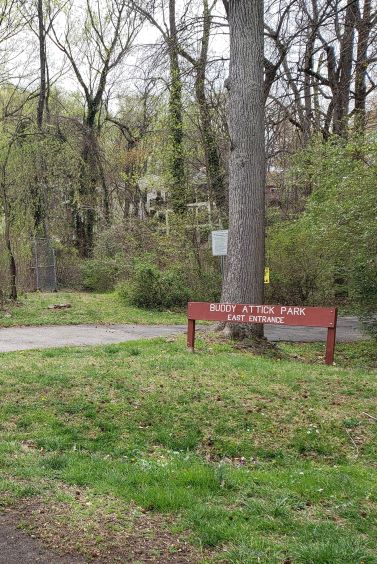
All Greenbelt images are courtesy of Wikipedia or are private snapshots